iPhone · Android coming soon
Simulate superconducting qubits.
Monium brings transmons, tunable transmons, and fluxonium to mobile — interactive energy spectra, wavefunctions, matrix elements, and coherence times, computed on-device.
- Transmon
- Tunable transmon
- Fluxonium
 Android coming soon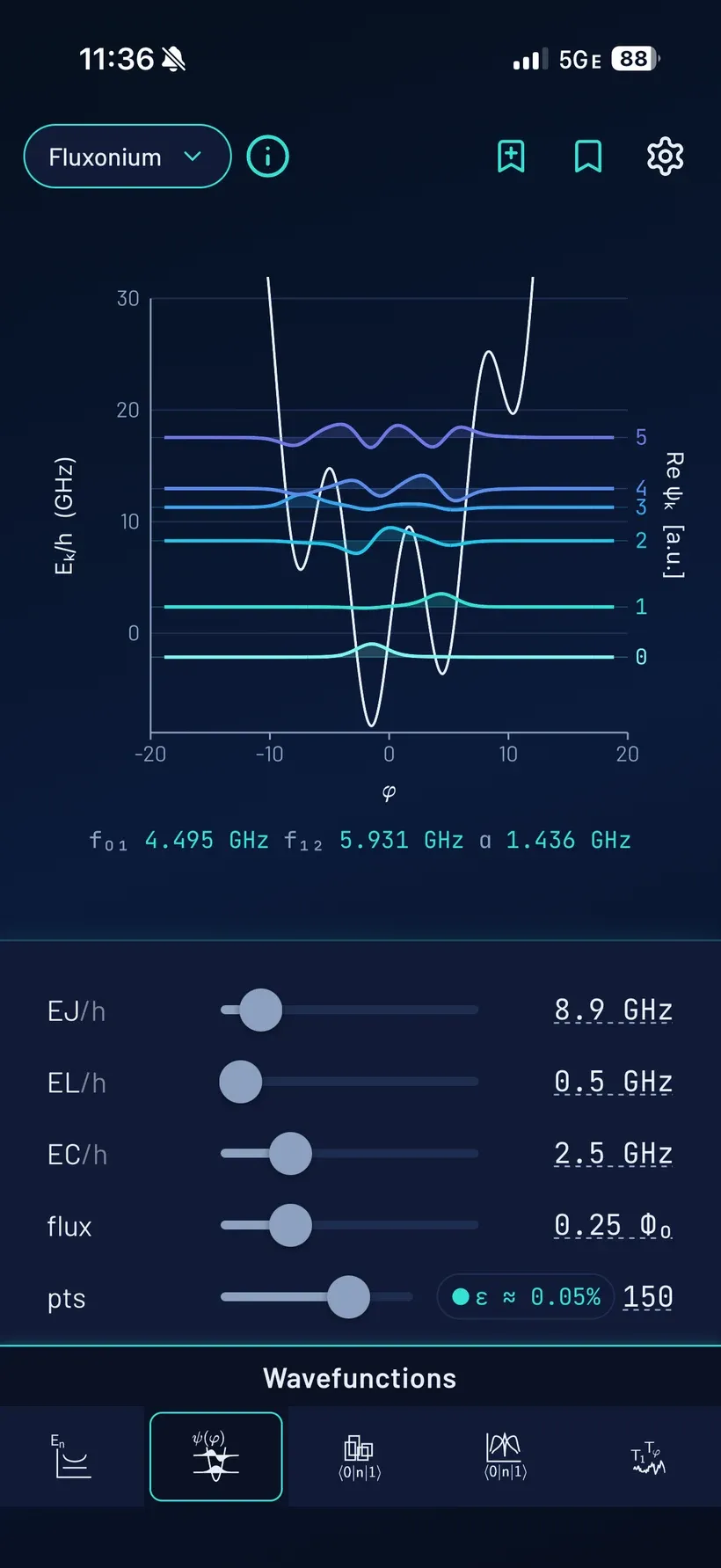
What it computes
Energy spectra
Eigenenergies swept over the parameters each qubit exposes — EJ, EC, charge offset, and flux where the qubit has one — with transition readouts.
Wavefunctions
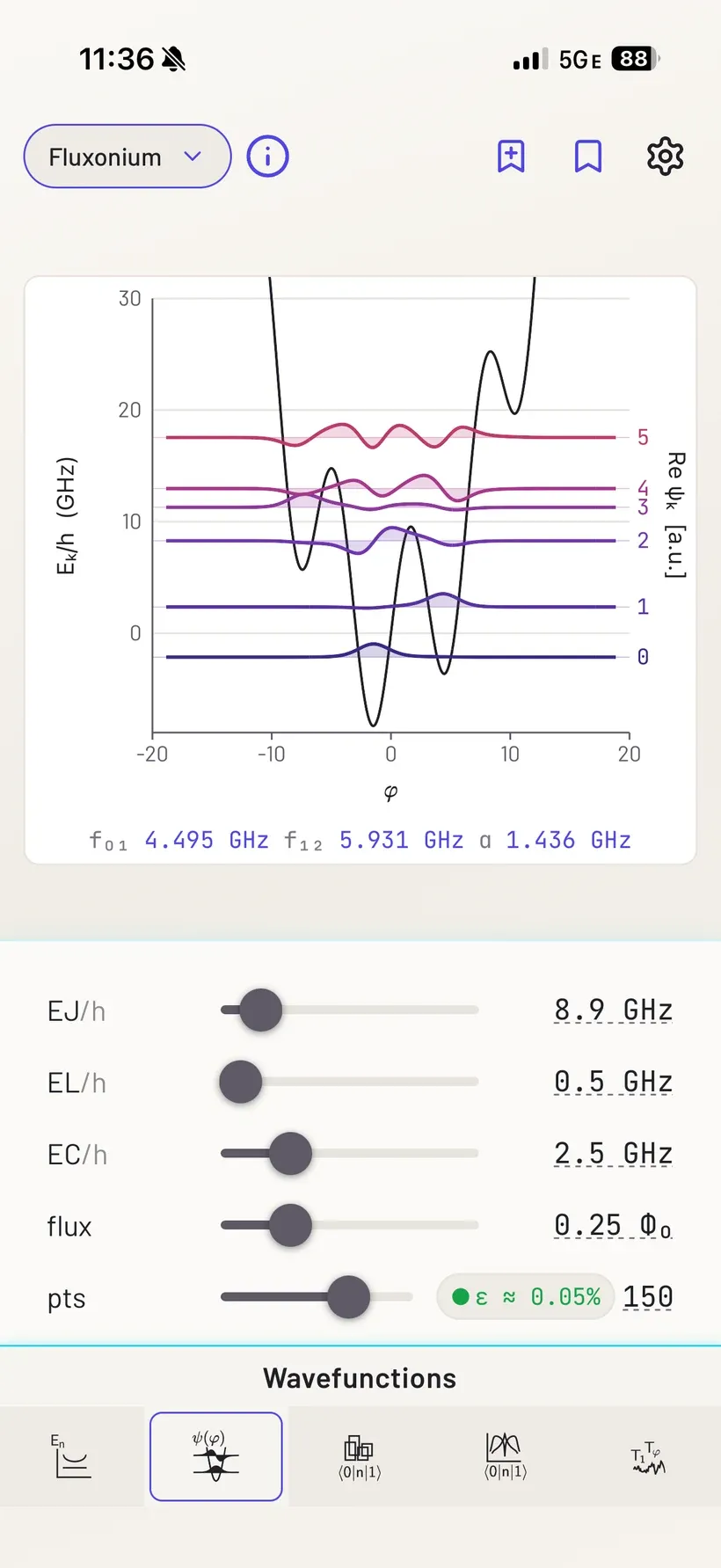
Plot |ψ|², Re ψ, Im ψ, or the charge basis over the qubit potential, level by level.
Matrix elements
Operator matrix-element heatmaps with magnitude, real, and imaginary views and LaTeX labels.
Matrix-element scans
Watch individual matrix elements evolve as you sweep a circuit parameter.
Coherence times
Per-channel T₁ and Tφ plus effective T₁/T₂ versus the swept parameter, on a log scale.
Convergence built in
An always-on convergence estimate flags levels that may not be converged, with one-tap refinement.
Every view, computed live on-device.
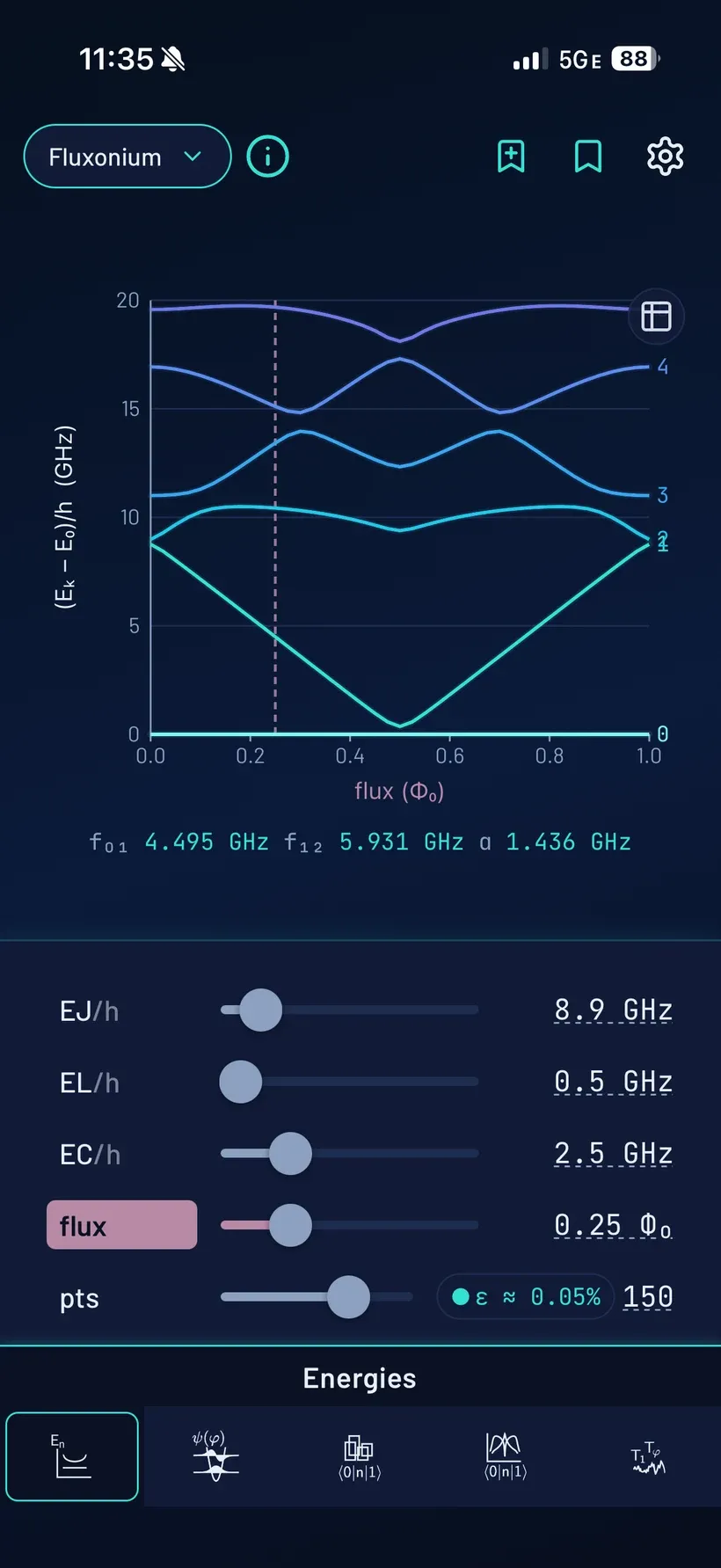
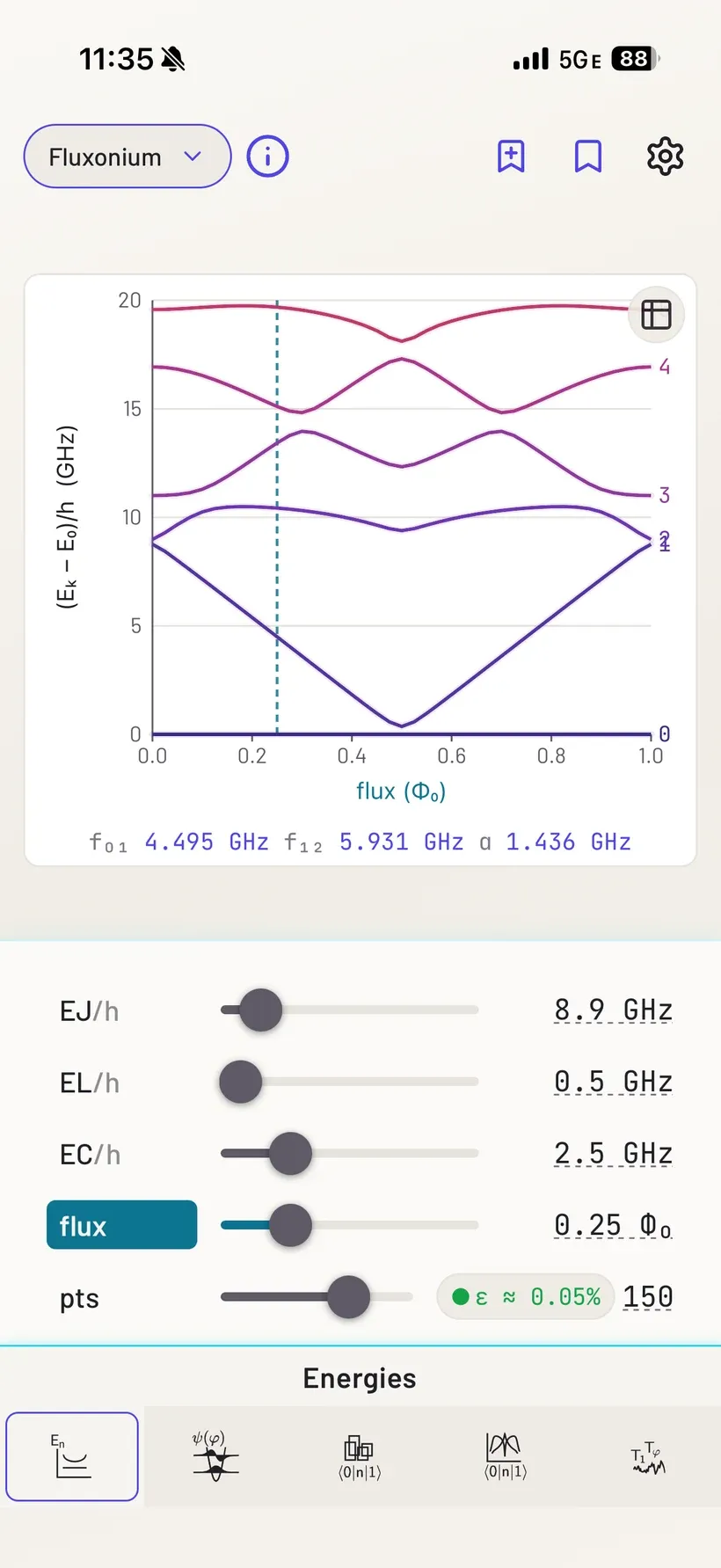 Energy spectrumLevels vs. flux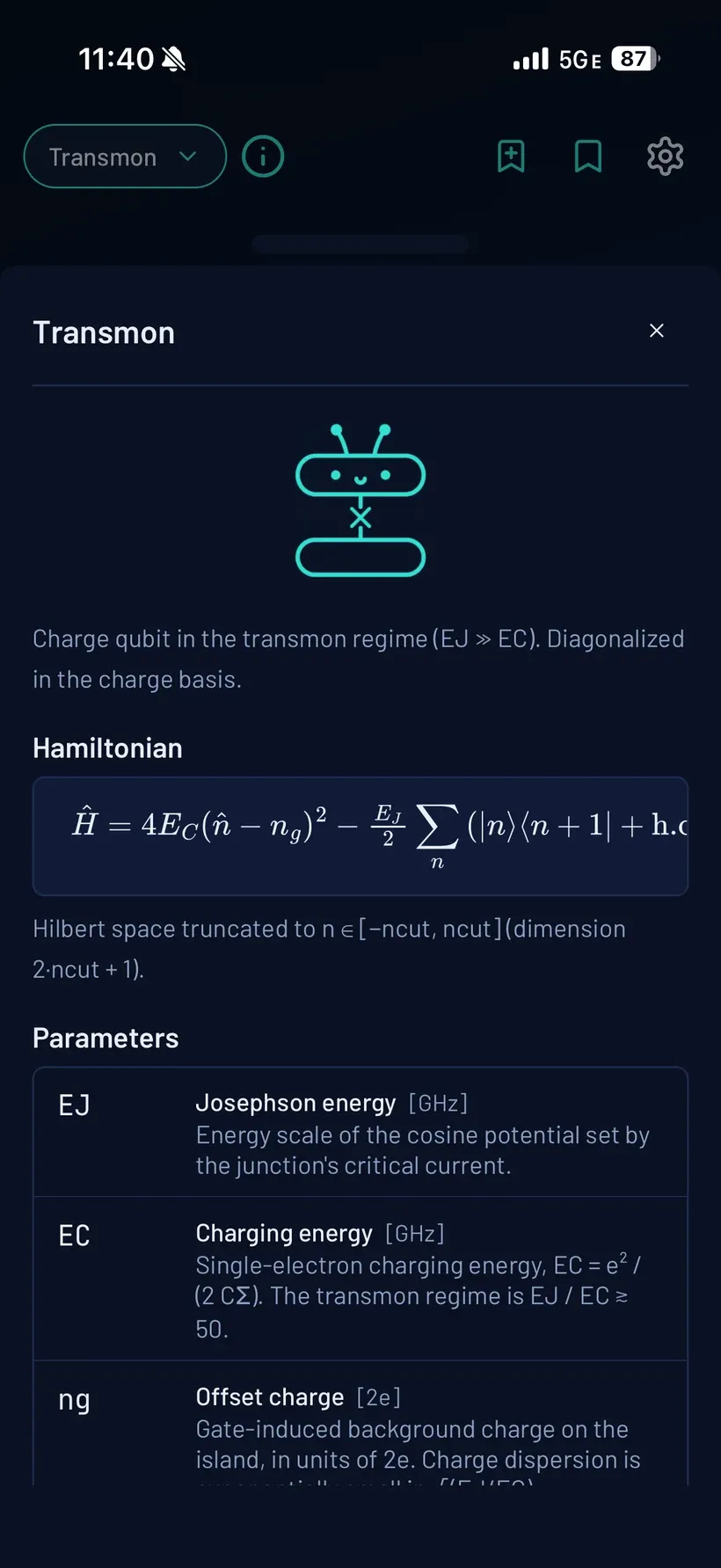
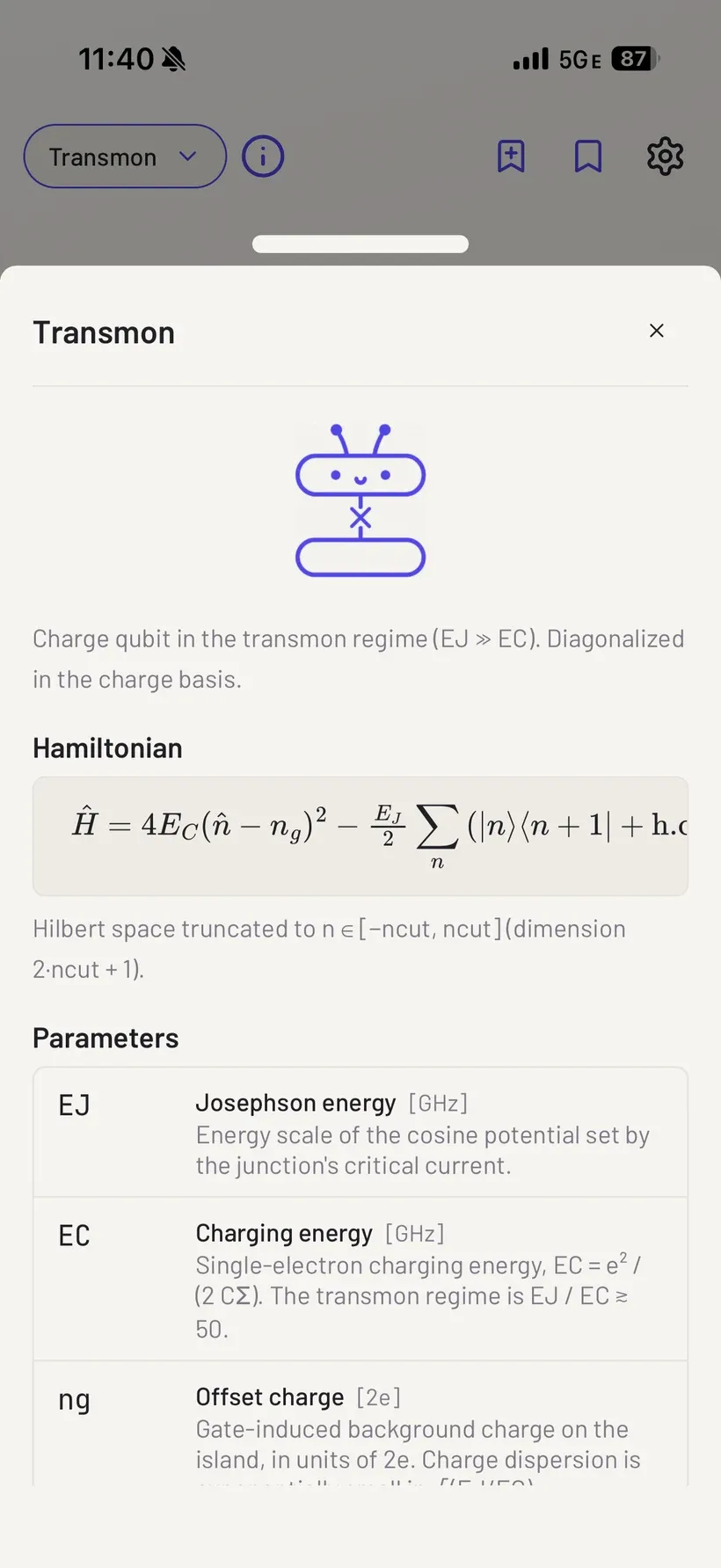 Circuit & HamiltonianThe physics, defined
- Wavefunctionsψ over the potential
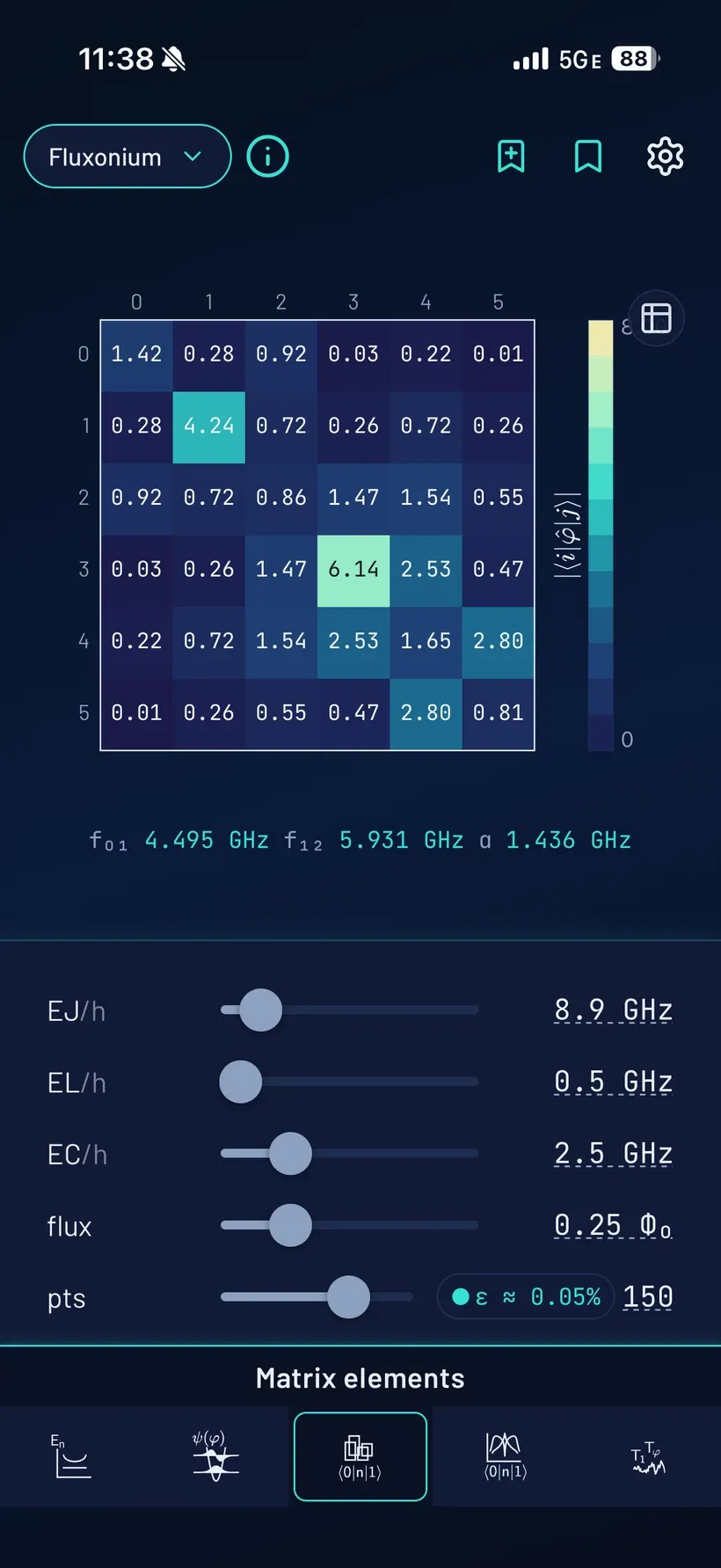
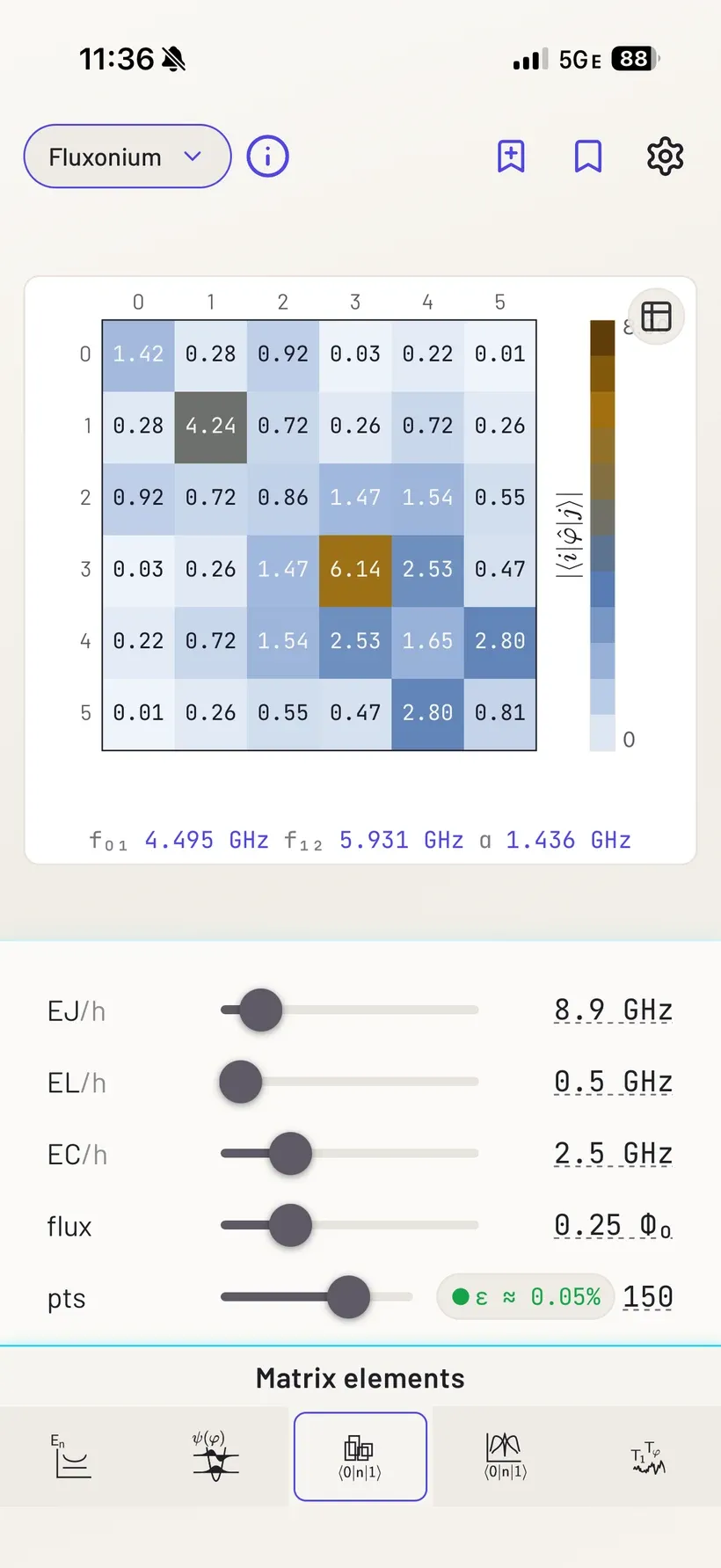 Matrix elementsOperator heatmap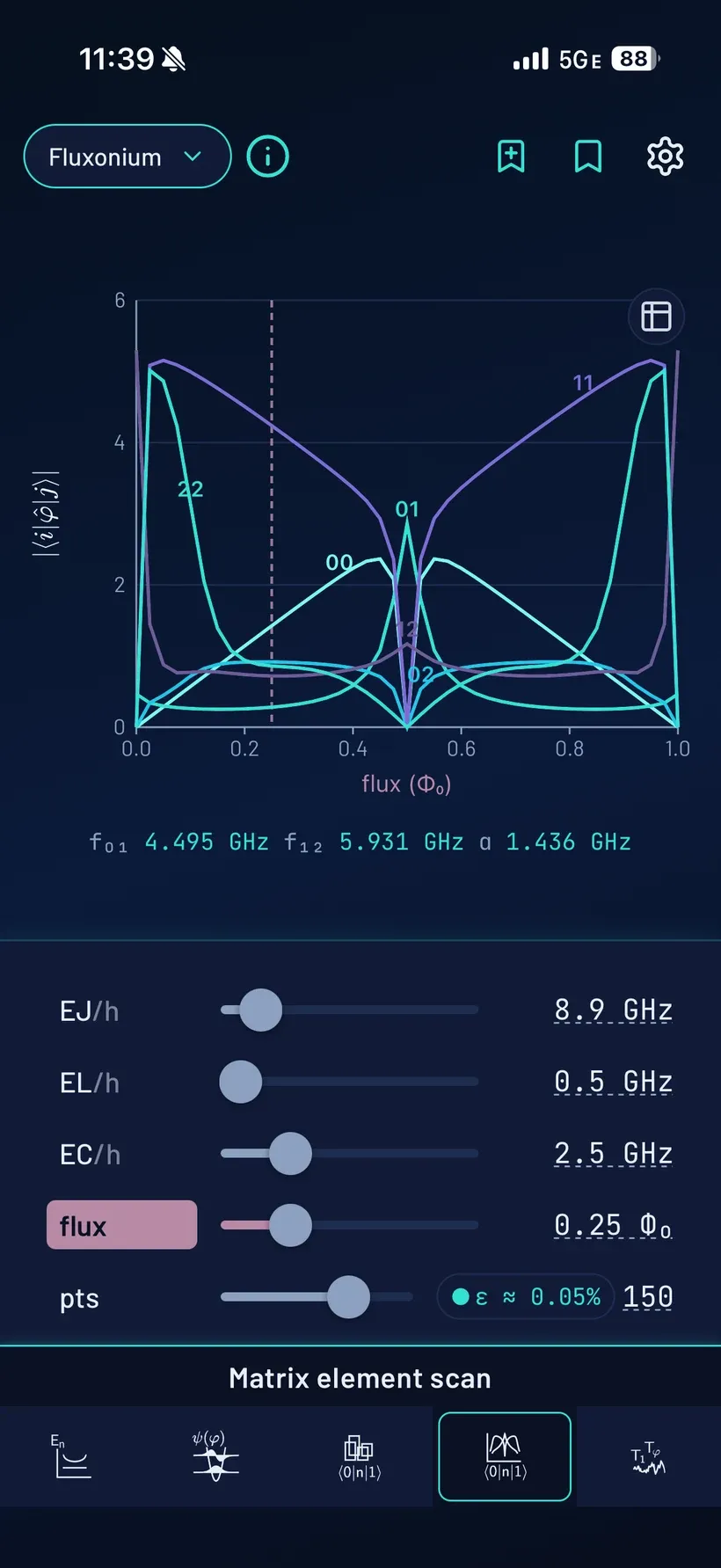
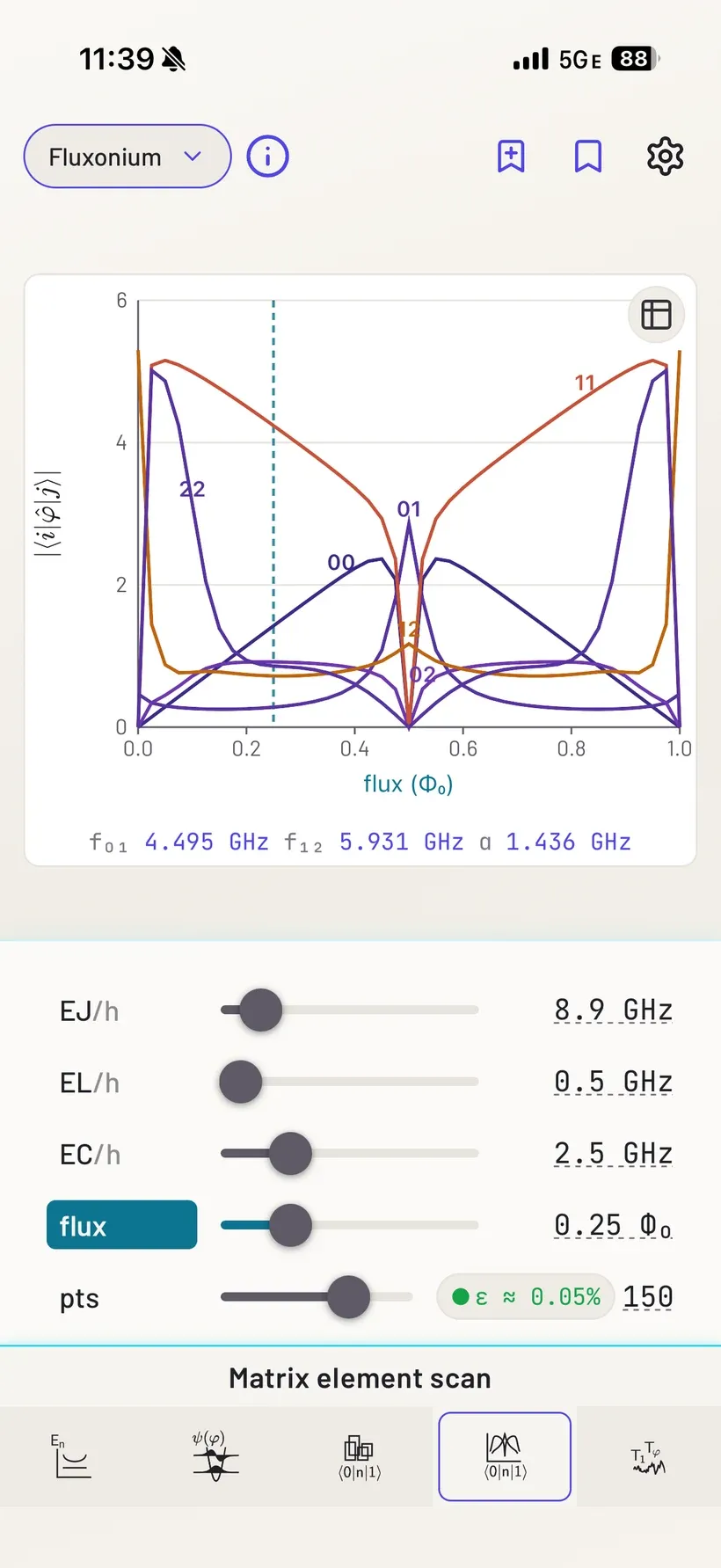 Element scanElements vs. parameter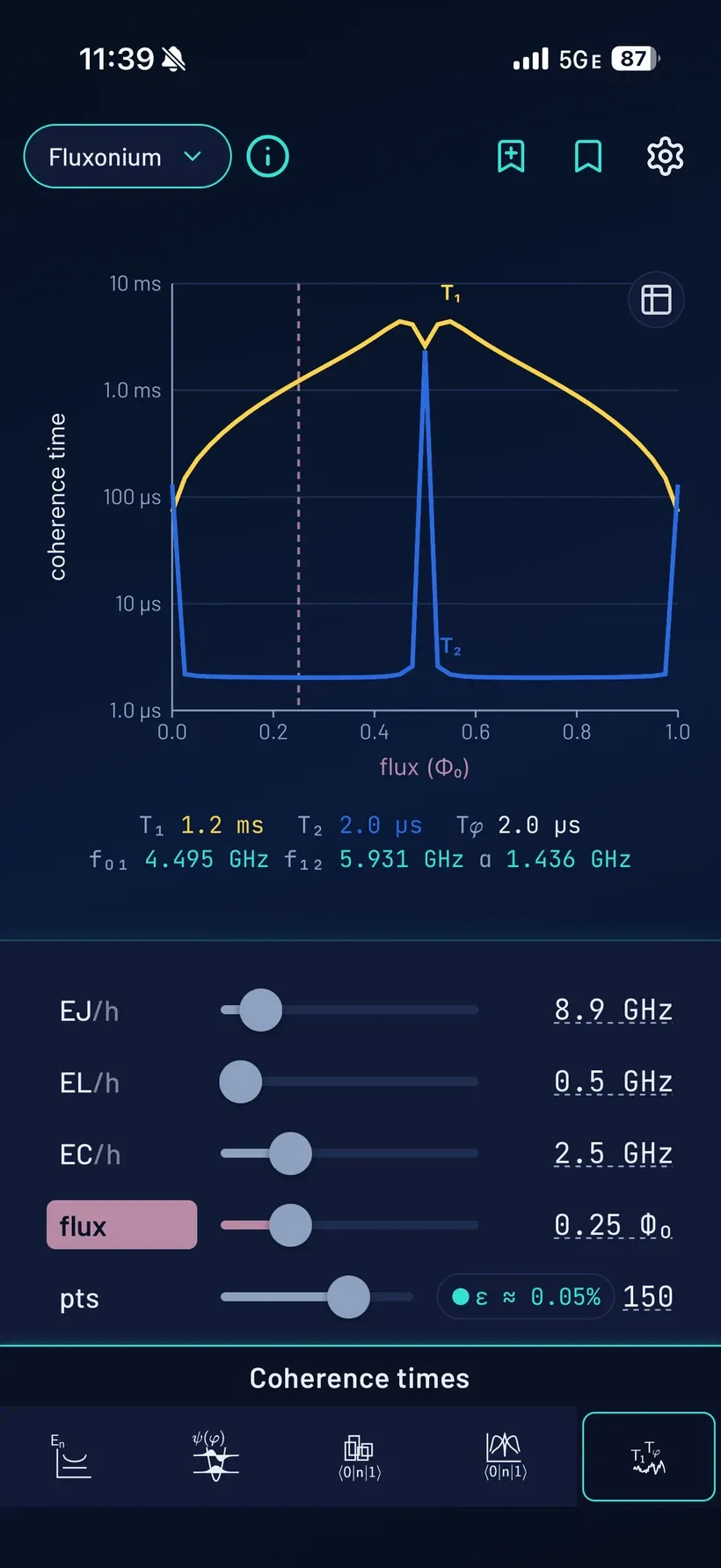
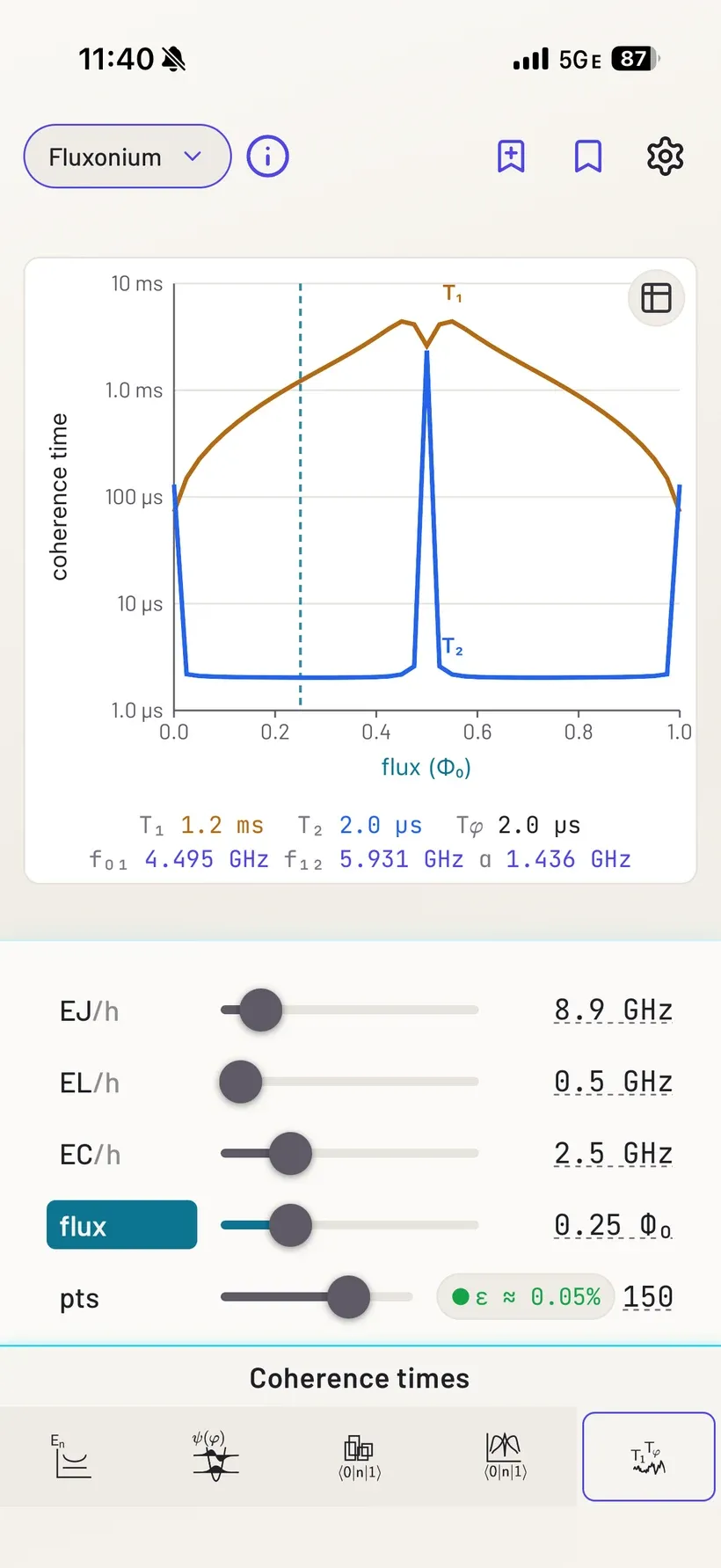 CoherenceT₁ / T₂ channels
Start from what you measure
Monium is for exploring the physics — convergence you can check and matrix elements in full — and it takes the quantities you measure — critical current, junction inductance, normal-state resistance — and turns them into spectra.
 For the bench
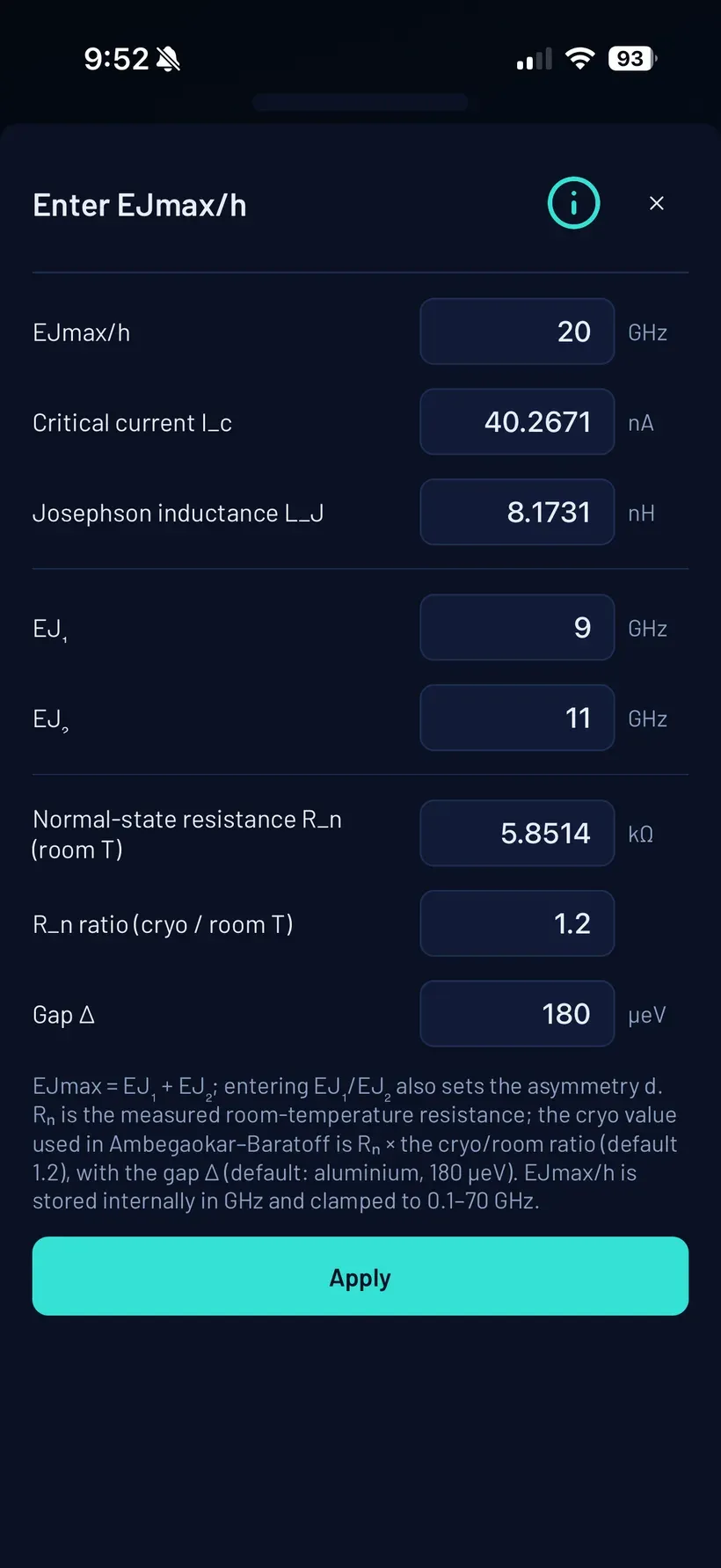
Enter what you measure
Set the energies the way your wafer reports them: the junction energy from critical current I_c, Josephson inductance L_J, or room-temperature normal-state resistance R_n (via Ambegaokar–Baratoff, with a cryo/room correction and a material gap — aluminum by default); the charging energy from a capacitance; the inductive energy from an inductance. On a tunable transmon, split E_J into its two junctions and the SQUID asymmetry follows.
 Convergence
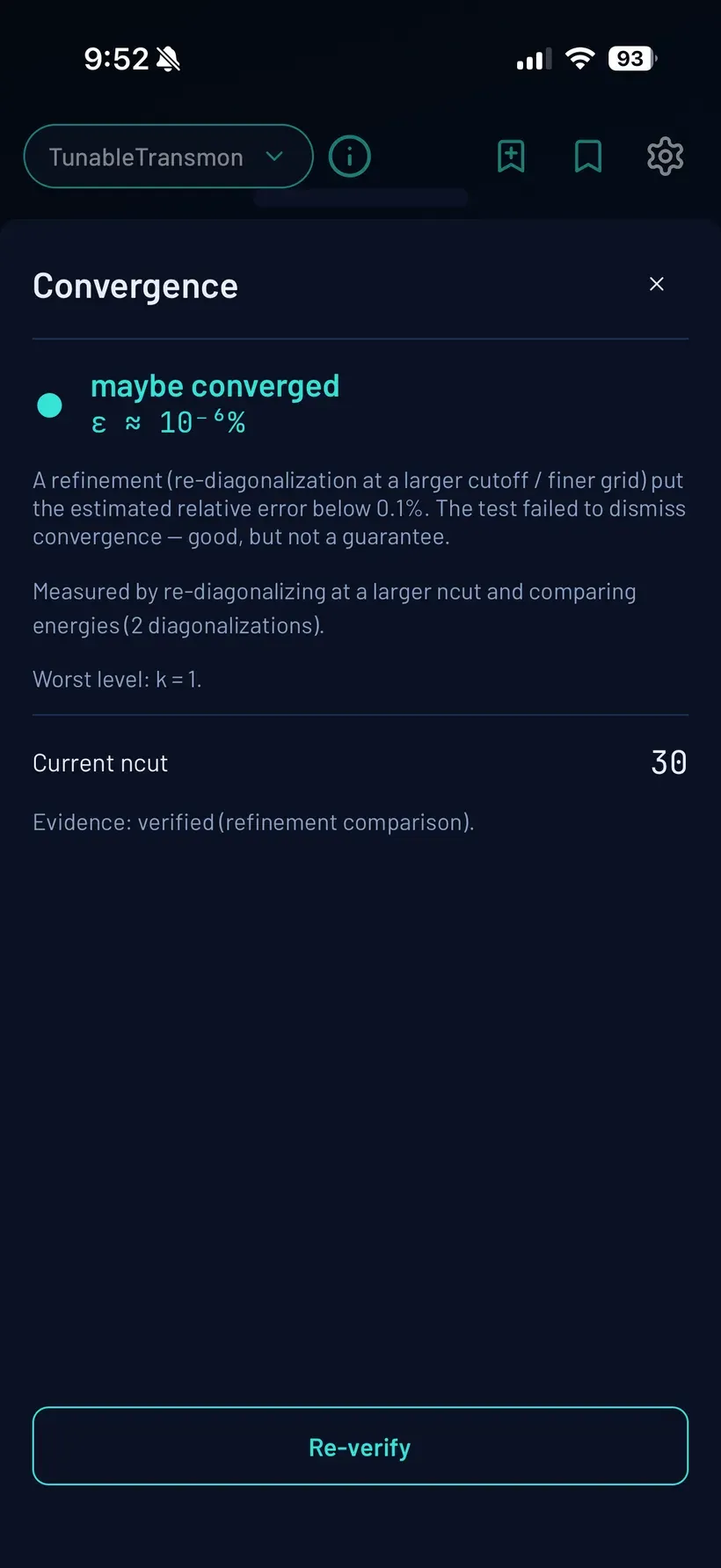
Check for convergence issues
The spectrum on screen carries a convergence check at the parameters you have set. Monium re-diagonalizes at a larger cutoff or finer grid, estimates the relative error, and flags levels that may not be converged — good evidence, not a guarantee. Re-verify on demand.
 Matrix elements
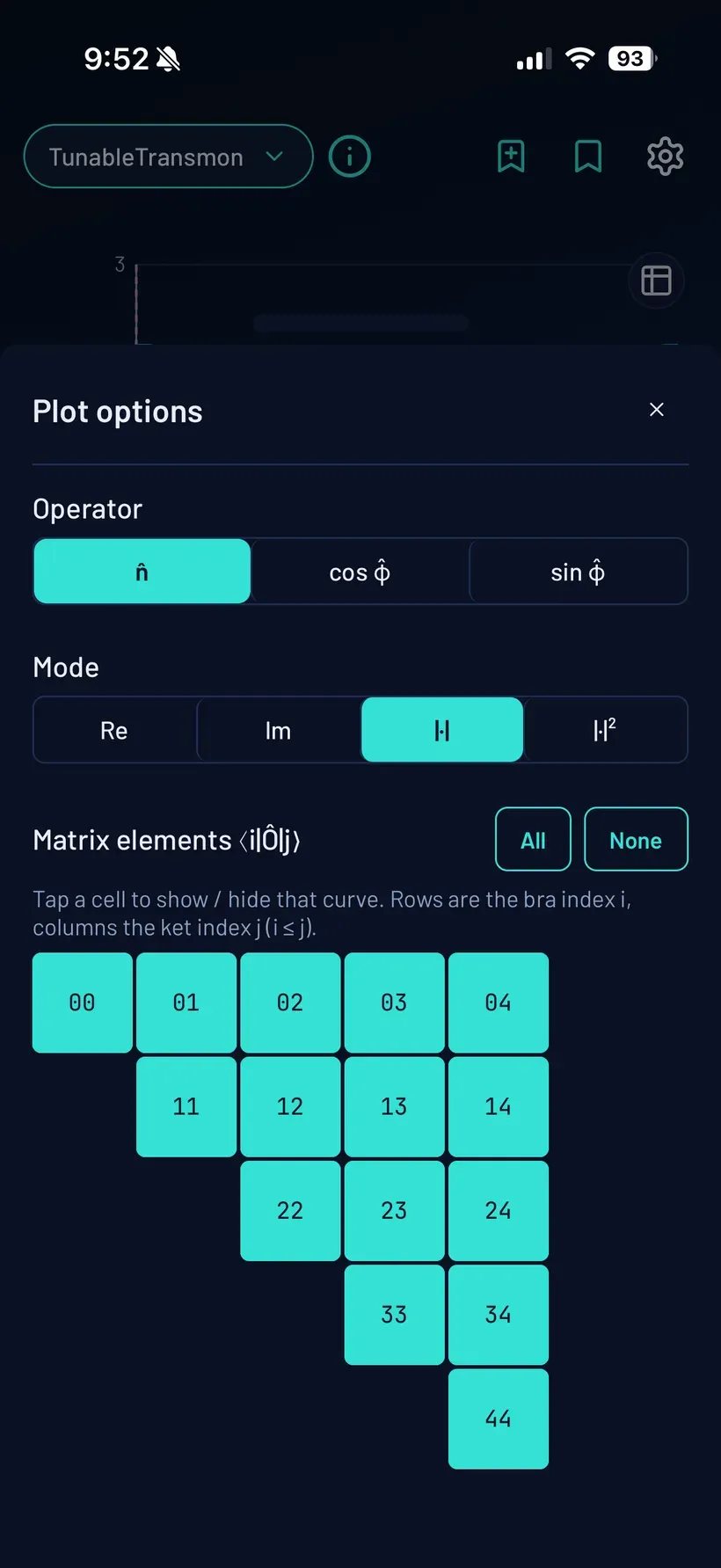
Choose the operator and the transitions
Inspect ⟨i|Ô|j⟩ for the operator you care about — n̂, φ̂, cos φ, or sin φ — as real part, imaginary part, magnitude, or |·|², and toggle exactly which transitions appear.
A port of scqubits, tested against it.
Monium’s engine is a port of scqubits, the open-source library for superconducting qubits, and follows its conventions. The spectra, matrix elements and coherence times of the transmon, tunable transmon and fluxonium are tested against scqubits.
Explore scqubitsNow on the App Store.
Monium is available on the App Store for iPhone. The Android version is coming soon.
Android coming soon